SS Checker Tool
Check website Spam Score online and review spam-related SEO indicators for your domain. Use the results to support your website analysis.
Check Spam Score Opens the external DAPA Checker website.SS Checker, also known as a Spam Score Checker, is an SEO tool that helps website owners review spam-related indicators associated with a domain or website. It can be useful for bloggers, SEO professionals, digital marketers, and web administrators who want to evaluate website quality and identify potential issues before making important SEO decisions. By checking Spam Score alongside other website metrics, users can better understand their website’s overall SEO profile.
Our SS Checker page provides information about checking website Spam Score and understanding the results. Depending on the tool’s available features and data source, users can submit a website URL or domain to review the supported metrics. These results can help guide further investigation, but they should not be treated as a final judgment of website quality or Google rankings.
What Is an SS Checker?
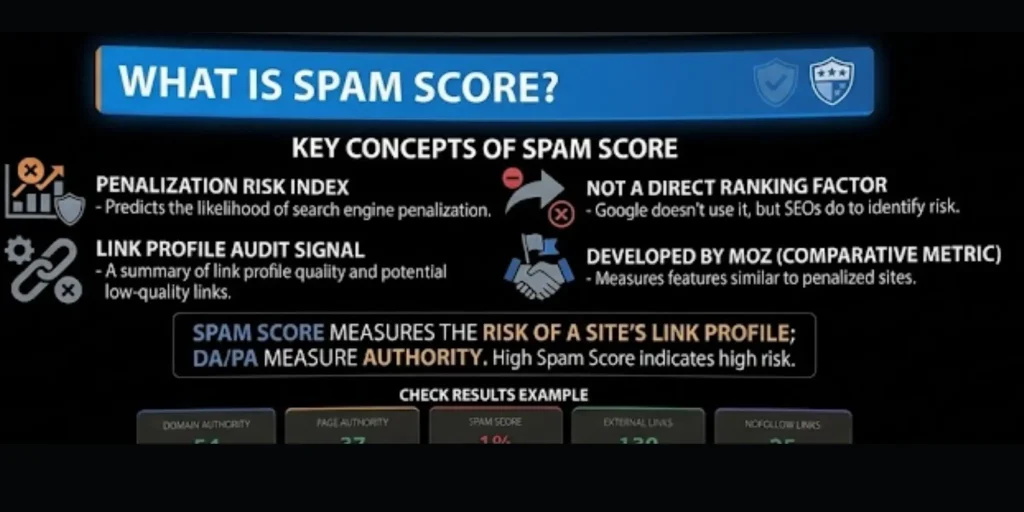
An SS Checker is a tool designed to review Spam Score information for a website or domain. In SEO discussions, Spam Score commonly refers to the metric developed by Moz, which estimates the likelihood that a website shares characteristics with sites that have been penalized or banned by search engines.
The metric is based on a set of spam-related signals and is intended to support website analysis. A higher Spam Score does not automatically mean that a website is harmful, and a lower score does not guarantee that a website is trustworthy. The result should always be considered alongside other relevant SEO information.
How to Use the SS Checker
Checking a website’s Spam Score is generally straightforward. Follow these steps to review the available information:
- Open the SS Checker tool on the website.
- Enter the domain name or URL you want to analyze.
- Click the check button to submit your request.
- Wait for the tool to process the submitted address.
- Review the Spam Score or other available SEO results.
The exact process may vary depending on the checker implementation and its data provider. If the tool does not return a score, verify the submitted URL and check whether the service supports the requested domain.
Why Is Spam Score Important for SEO?
Spam Score can provide an additional signal when reviewing a website’s backlink profile and general SEO condition. Website owners may use it to identify domains that deserve closer inspection, especially when reviewing links from unfamiliar websites or evaluating potential link-building opportunities.
However, Spam Score is not a direct Google ranking factor. Search engines use their own systems to evaluate websites and links. Therefore, a website should not be rejected, penalized, or considered unsafe based only on one third-party metric.
Key Features of an SS Checker
- Website Spam Score Analysis: Review the Spam Score information supported by the selected tool.
- Domain Review: Examine available spam-related indicators for a domain.
- SEO Research: Use results as part of a broader website analysis.
- Backlink Evaluation: Support the review of potentially questionable linking domains.
- Competitor Analysis: Compare available metrics across websites in the same niche.
- Simple URL Submission: Enter a website address to begin the checking process.
The features and results available depend on the underlying data source and the functionality implemented by the checker.
How to Understand Spam Score Results
Spam Score results should be interpreted carefully. A score is an indicator for further analysis rather than proof that a website uses spam techniques.
When reviewing a result, consider the following points:
- Check the website’s content quality and relevance.
- Review whether the domain has a natural and relevant backlink profile.
- Examine suspicious or unrelated links when reliable backlink data is available.
- Look for signs of copied content, misleading pages, or excessive advertisements.
- Compare results with other SEO metrics before reaching a conclusion.
A single score cannot explain every issue affecting a website. Manual review and additional evidence are important when evaluating SEO risks.
How to Reduce Potential Spam Signals
If your website has a high Spam Score, focus on reviewing the underlying factors rather than trying to change the number directly.
Review Your Backlink Profile
Examine links from irrelevant, suspicious, or low-quality websites. Investigate unusual link patterns and determine whether the links present a genuine concern. Do not remove or disavow links automatically just because a third-party tool labels a domain as potentially spammy.
Publish Original Content
Create useful, accurate, and relevant content for your audience. Avoid publishing large volumes of low-value pages or duplicating material from other websites. Clear and helpful content supports a better user experience.
Avoid Manipulative Link Building
Do not rely on link schemes, automated backlink generation, or paid links intended to manipulate search rankings. Focus on earning relevant links through useful resources, genuine relationships, and quality content.
Maintain Website Quality
Review broken pages, misleading redirects, suspicious outgoing links, and unnecessary low-quality content. Keep important website information accurate and make sure visitors can navigate the site easily.
Monitor Changes Regularly
Check your website’s SEO profile periodically and compare results over time. Use consistent tools and consider changes in the underlying data before deciding whether an SEO problem has improved.
SS Checker vs DA Checker and PA Checker
Spam Score, Domain Authority, and Page Authority describe different aspects of SEO analysis.
| Feature | SS Checker | DA Checker | PA Checker |
|---|---|---|---|
| Main purpose | Reviews spam-related indicators | Estimates domain ranking potential | Estimates individual page ranking potential |
| Analysis level | Website or domain | Entire domain | Individual webpage |
| Common use | Investigating possible spam signals | Comparing domain authority | Comparing page authority |
| Google ranking factor | No | No | No |
These metrics are useful for research, but none independently determines how Google ranks a webpage. Consider content quality, search intent, technical SEO, and backlink relevance as well.
Who Can Benefit from an SS Checker?
Bloggers can use Spam Score information when reviewing websites before collaborating with other publishers. SEO professionals may include the metric in website audits, while digital marketers can use it as one supporting signal during backlink research.
Website owners can also review their domains periodically to identify areas that require further investigation. Nevertheless, any important decision should be based on a complete assessment rather than a single numerical result.
Is the SS Checker Free?
Whether an SS Checker is free depends on the service providing it. Some tools offer free checks with limits, while others may require registration, credits, or a paid subscription for detailed information.
Available features, checking limits, and data accuracy can vary. Review the tool’s instructions and terms before relying on its results for professional SEO work.
Limitations of Spam Score
Spam Score is an estimate based on specific indicators, not a direct measurement of a website’s trustworthiness. It does not prove that Google has penalized a domain, nor does it guarantee that a website will rank well or poorly.
Different tools may use different datasets and methods, so their results may not match. A high score should encourage further investigation, while a low score should not replace routine SEO checks.
Frequently Asked Questions
What is an SS Checker?
An SS Checker is an SEO tool used to review Spam Score information and investigate potential spam-related signals associated with a website.
Is Spam Score a Google ranking factor?
No. Moz’s Spam Score is a third-party metric and is not a direct Google ranking factor.
Does a high Spam Score mean my website is penalized?
No. A high score does not confirm a Google penalty. Review the website’s content, backlinks, and available search performance information for further evidence.
Can I check another website’s Spam Score?
You can submit another domain if your selected tool supports it and provides data for that website.
How often should I check Spam Score?
Periodic checks can help with SEO monitoring. Review the metric alongside backlink quality, content, and other relevant information instead of reacting to every small change.
Conclusion
An SS Checker can help website owners and SEO professionals review Spam Score information and investigate possible spam-related signals. When used correctly, it can support backlink research, competitor analysis, and routine website audits. For better decisions, combine Spam Score with content evaluation, technical SEO checks, backlink analysis, and actual search performance data. Remember that third-party metrics are useful indicators, not definitive judgments of website quality or Google rankings.